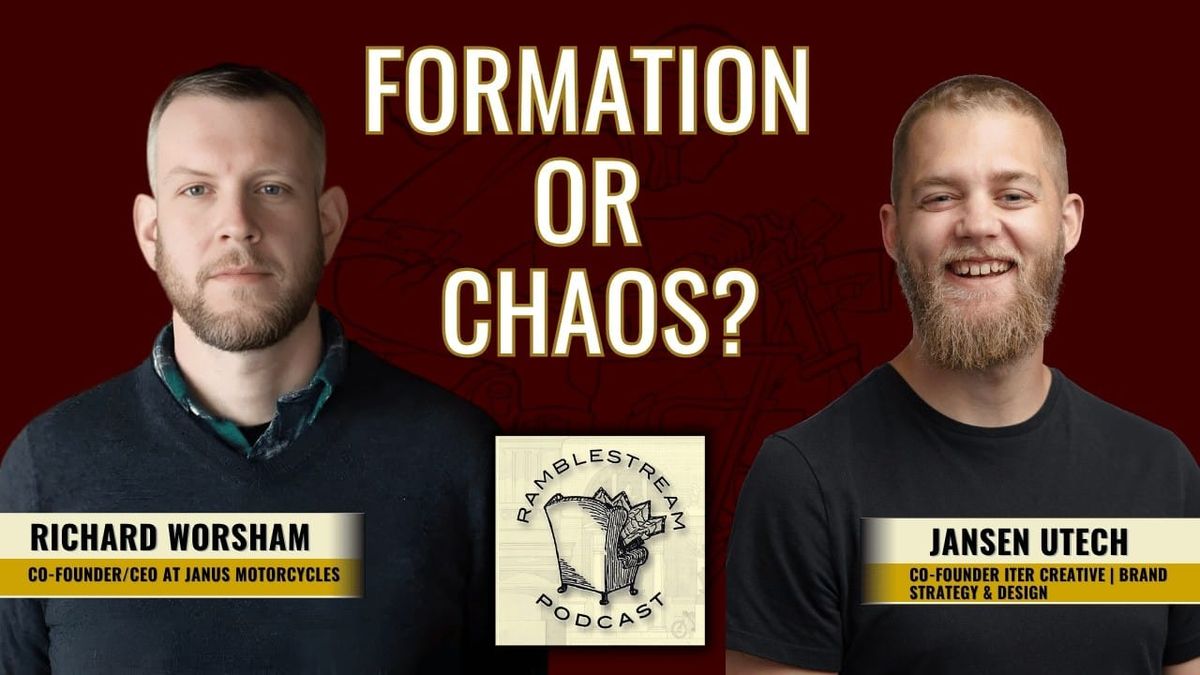
Group riding is often sold as the ultimate communal experience, but the unpolished reality is that it requires a high level of mental fatigue and constant vigilance. Whether you’re navigating the Appalachian twisties or a local charity event, the margin for error shrinks the moment you add a second set of wheels to the formation. Richard and Jansen sit down to discuss why the "Blue Angels" feeling of riding in sync is so hard to achieve and why being the most "boring" rider in the pack is actually the highest compliment you can receive.
We sit down to analyze the logistics of moving sixty-plus motorcycles through a single intersection without losing the tail end of the group. The conversation covers tactical advice like identifying rider experience through body language and the technical differences between simple, robust overhead valve engines versus high-performance overhead cams. We also get into the specific "things" that make a ride successful, from the essential Cruise Tool Kit to the psychological comfort of a well-worn wax canvas tool roll. The secret sauce of this episode lies in the philosophy that fun doesn’t scale with horsepower; it’s about how much of the machine you’re actually using.
The unglamorous truth is that leading a ride often means sacrificing your own enjoyment for the safety of others, dealing with the stress of traffic light timing and "unpredictable" pack members. You’ll walk away from this episode with a renewed focus on riding within your personal limits and a checklist of how to build a toolkit that evolves with your riding style. It’s a reality check for anyone who thinks group riding is just a parade without consequences.
More About this Episode
The Art of the Ride: From Appalachian Curves to the Rhythms of Group Riding
There is a specific kind of magic that happens when you cross the state line into the Appalachian Mountains. I recently spent some time winding through the valleys of Virginia and West Virginia, and it served as a potent reminder of why we do what we do at Janice Motorcycles. Every road in that part of the country feels like it was designed specifically for a motorcycle. They aren't just paths from point A to point B; they are invitations to engage with the landscape. When you’re leaning into a curve in the Lexington valley, you aren't just a passenger on a machine. You are a participant in a geographical dialogue.
That sense of participation is at the heart of everything we build, whether it is a 250 or our newer 450 platforms. It is about the connection between the rider, the machine, and the environment. This week, I’ve been thinking a lot about how that connection shifts when you move from a solo spirit quest in the mountains to the collective energy of a group ride. There is a choreography to riding with others that transforms the experience into something entirely different; a mechanical dance that, when done right, is one of the most rewarding aspects of the lifestyle.
Mechanical Philosophy: Overhead Valves vs. Overhead Cam
Before diving into the social dynamics of the road, it is worth looking under the hood or, rather, inside the engine casing. We often get questions about the technical differences between our engine designs, specifically the transition from the overhead valve (OHV) setup in our 250s to the overhead cam (OHC) in the 450s.
The OHV engine, or pushrod engine, is a marvel of robust simplicity. It uses a single camshaft located down in the engine block to push rods upward, which in turn operate the intake and exhaust valves. It is a durable, low maintenance design that provides a classic feel. In contrast, the OHC engine in our 450s uses a chain driven cam located right in the cylinder head. This allows for four valves per cylinder and much more precise control over valve timing.
While the OHC offers higher performance and modern efficiency, there is a deep seated charm in the simple, rhythmic thrum of a pushrod engine. It is the difference between a high tech digital watch and a fine mechanical timepiece. Both tell the time, but they communicate with the user in very different languages. This technical choice dictates how the bike feels when you’re pulling away from a stoplight or cruising down a country lane.
The Gear That Defines the Journey
A rider is only as prepared as their toolkit. We’ve spent a lot of time developing the Cruise Tool kit and our waxed canvas tool rolls because we believe that a tool should be a "thing," an object that gains character through use. There is a specific satisfaction in owning a tool that has the anodizing worn off from years of actual work.
I carry a compact German Vera kit every day. It is ergonomic, beautiful, and has a ratcheting driver with sixty detents that feels like a precision instrument in your palm. But the real value of a toolkit isn't just in the brand name; it is in the evolution of the kit itself. Your toolkit should be a living entity. It changes as you ride different bikes or learn new tricks from fellow riders. It becomes a repository of memories, such as the wrench you used to tighten a mirror in a rainstorm or the pliers that saved a buddy’s trip.
Those marks and the patina on a well used tool roll are like tattoos. They are bookmarks in your life. You look at a specific scuff and remember exactly where you were and what you were thinking when it happened. Our senses have a strange way of working together; the smell of a woodfire stove mixed with oil can transport you back decades. A good tool, much like a good motorcycle, is a conduit for those memories.
The Dynamics of Group Riding: A Mechanical Formation
When we talk about group riding, people often jump straight to safety lectures. Safety is paramount, of course, but we should also talk about the sheer exhilaration of it. There is a reason the original cafe racers of 1950s England, many of whom were ex pilots, rode in formation. They were looking for that "Blue Angels" feeling on two wheels.
Riding in a group turns a solo activity into a coordinated effort. However, it does require a different headspace. My favorite place in a large ride is usually about three quarters of the way back. At the front, you’re burdened with the logistics of traffic lights and navigation. At the back, you’re dealing with the "slinky effect." But in that sweet spot toward the rear, you get to see the whole line of bikes stretching out for a mile. You see the reactions of the people on the sidewalk. You hear the collective roar of dozens of engines working in unison. It’s a scene. It’s a parade that you happen to be powering.
The Golden Rules of the Pack
To keep that experience positive, there are a few principles I’ve picked up over the years. The most important is riding within your own limits. The "pack mentality" can be dangerous when riders feel pressured to keep up with someone more experienced or more reckless.
- Predictability is Key: Your fellow riders should never be surprised by your movements. If you’re going to do something unusual, signal it early.
- Know Your Distance: Don’t ride on someone’s tail just because you know them. Give everyone enough room to react to a sudden obstacle or a mechanical hiccup.
- The Synchronized Dance: When you ride with the same one or two people for years, you develop a silent language. You start to feel what the other rider is going to do before they do it. It takes time to get in sync, but once you do, it is a dream.
We also use a variety of hand signals to communicate on the fly. Pointing a foot toward the ground to warn of debris or potholes is a standard courtesy. Motioning left or right, or signaling a slow down, keeps the formation tight and informed. There is also a certain "group ride guru" status that comes with being the guy who has the exact specific tool needed to fix a roadside issue. It’s like having a pocketknife when someone needs to open a package; it’s a small moment of service that strengthens the bond of the group.
Looking Ahead to the Riding Season
We have a lot of opportunities for group interaction coming up. The Distinguished Gentleman’s Ride (DGR) is just around the corner, and it is always a highlight. There is something special about seeing forty or fifty riders dressed in their dapper best, raising money for men’s health. It requires a bit of restraint to look truly dapper on a bike, but the cause is worth the effort.
We are also gearing up for the Moto Makers Market in Detroit. It is a fantastic venue, specifically an old manufacturing plant turned into a hub for art, music, and coffee. We’ll be hosting interactive workshops there, and I’m looking forward to the hands on sessions. These events are where the community really comes alive.
Whether you prefer the solitary peace of an Appalachian mountain road or the thunderous camaraderie of a hundred bike rally, the essence remains the same. It is about the ride. It is about using all fourteen horsepower of a 250 to stay engaged rather than just sitting on a 150 horsepower beast that is judging you for not using its potential. Less power often makes for a better rider, and being a better rider makes for a much more interesting life.
As we move deeper into this riding season, I encourage you to find that balance. Take the long solo trip to clear your head, but don't shy away from the group. Join the dance, learn the signals, and keep your toolkit ready. We’ll see you out there on the road.