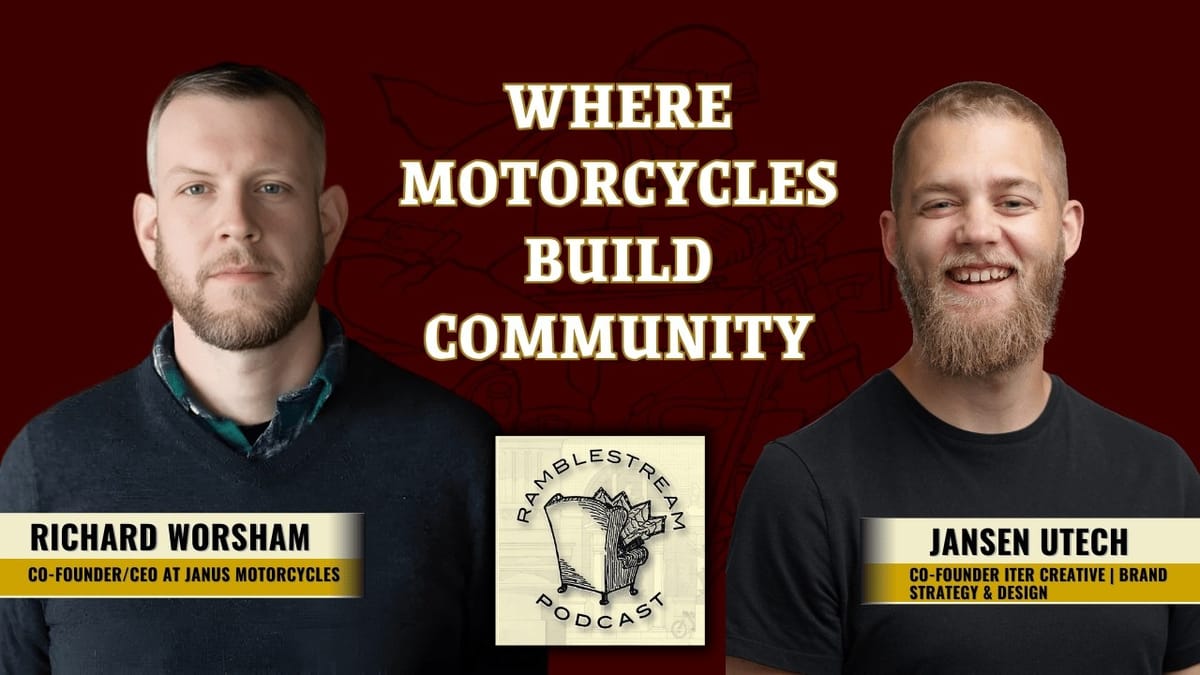
Snow, skis, and a barn full of slot cars set the stage for a conversation about how riders actually get better. We kick off with community vibes and featured Janus builds, then get hands-on with a forged aluminum upgrade: new Halcyon 450 pegs that fold with a satisfying detent, grip when it counts, and service easily. From there, we head north to Winter Moto Camp, where deep powder, iced roads, and a Griffin 450 in the back of a Rivian push comfort zones, and prove that smart setup and shared experience can turn chaos into confidence.
The heart of the show is a clear look at habits versus routines. We frame habits as the internal grooves formed by repetition and routines as the intentional sequences that bring order to complex tasks. On a motorcycle, that distinction is everything. Pre-ride checks, a reliable launch, how you scan and cover controls at intersections, these routines make the road simpler so you can spot risks sooner and ride with more control. As you rehearse them, they harden into habits and, over time, shape identity: “I’m the kind of rider who leaves room, reads traffic, and flows through corners.”
We ground the idea in real riding: how a better green-light sequence lowers risk, why changing a routine is hard but necessary, and how hardware choices, like those grippy 450 pegs, reinforce consistent body position. Community ties it together. Small gatherings like Rye'd or Die at Journeyman (February 14) and events like Winter Moto Camp give riders the chance to swap routines, test ideas, and raise the collective bar. Excellence isn’t a hack; it’s practice with feedback, and that’s where the fun lives.
If this resonates, tap follow and share the episode with a rider who loves both craft and community. Drop your pre-ride routine or favorite upgrade in the comments, subscribe for weekly streams, and leave a quick review to help more curious riders find the show.
More About this Episode
Habits, Routines, and the Paths We Ride
There is something about motorcycles that make patterns visible. You notice it the first time you ride consistently. The way you mount the bike. The order in which you reach for controls. The small checks you do without thinking. At first, everything feels awkward and loud and overwhelming. Then, slowly, without any announcement, a rhythm takes over.
That rhythm is not accidental. It is built from habits and routines, two words that are often used interchangeably but mean very different things. Understanding the difference between them explains not only how we ride motorcycles, but how we live our lives, how we improve at anything worth doing, and why some people keep moving forward while others feel stuck in the same place year after year.
Motorcycling makes these ideas concrete because the consequences are immediate. If your routines are sloppy, the bike reminds you. If your habits are careless, the road teaches you. But the same principles apply far beyond riding.
What a Habit Really Is
A habit lives inside you. It is not a checklist or a schedule. It is something you do without thinking, something that has become part of your character.
When you reach for the clutch without looking, that is a habit. When you instinctively roll off the throttle approaching an intersection, that is a habit. You did not wake up one morning and decide to do those things consciously. They formed over time through repetition, correction, and experience.
Habits are powerful, precisely because they require very little effort once established. They free up mental space. You are no longer deciding what to do. You are simply doing it.
This is why habits shape identity. A cautious rider, a reckless rider, a patient mechanic, a sloppy mechanic. These are not just behaviors. They are descriptions of who someone has become through repeated action.
Habits can be good or bad, helpful or destructive. The key point is that they operate beneath the surface. They are automatic.
What a Routine Actually Is
A routine, by contrast, is external. It is intentional. It is a structure you create and attempt to follow.
The word itself comes from the idea of a path made passable through repetition. A trail worn into the landscape because people keep walking the same way. A routine is not the instinct to walk. It is the path you choose to take.
A daily routine might include when you wake up, how you prepare for work, when you eat, and how you wind down at night. A riding routine might include a pre-ride inspection, how you warm up the engine, or the order in which you gear up.
Unlike habits, routines require conscious effort to establish. You decide to do them. You outline them. You often fail at them before they stick.
A routine is not who you are. It is what you are trying to do.
Why Routines Matter So Much
Life without routines is chaos. Everything feels new all the time. There is no rhythm, no efficiency, no sense of flow.
Think about learning to ride a motorcycle for the first time. Every action requires focus. Where does my foot go? How much throttle is too much? When do I release the clutch? Nothing is automatic.
A routine brings order to complexity. It creates a sequence that you can follow when the task itself feels overwhelming.
Pilots use routines. Mechanics use routines. Racers use routines. Artists, musicians, writers, and builders all rely on routines to make difficult work manageable.
A routine allows you to stop reinventing the wheel every time you show up. It says this is how I do this thing.
Without routines, improvement stalls because all your energy is spent just getting through the task.
How Routines Create Habits
This is where the two ideas connect.
A routine is the framework that allows habits to form.
When you repeat a routine often enough, parts of it sink below the level of conscious thought. What began as an intentional sequence becomes automatic. The routine gives birth to habits.
A pre-ride inspection is a routine. Over time, checking tire pressure, controls, lights, oil, and chain tension stops feeling like a checklist and starts feeling like second nature. Eventually, you feel uneasy if you skip it, even if you cannot articulate why.
That unease is habit taking hold.
The same is true outside motorcycling. A writing routine creates the habit of writing. A training routine creates the habit of movement. A morning routine creates the habit of focus.
Routines are scaffolding. Habits are the structure that remains once the scaffolding is no longer needed.
The Danger of Ruts
There is another side to routines that cannot be ignored.
A path worn deep into the ground can be hard to leave.
When routines become rigid, they turn into ruts. You keep doing something the same way not because it is effective, but because it is familiar. Improvement stops. Curiosity fades.
This is why people resist changing routines even when they know there is a better way. Leaving a well worn path takes effort. You have to climb out of it before you can walk somewhere new.
The problem is not having routines. The problem is failing to examine them.
A routine should serve you. When it stops doing that, it needs adjustment.
Excellence Requires Structure
There is a reason complex pursuits rely on routines.
Fly tying follows recipes. Sharpening tools follows sequences. Riding fast on track days follows braking markers and entry points. Even something as simple as making coffee often has a personal ritualized process.
These routines are not restrictions. They are enablers.
They reduce friction. They allow attention to move from mechanics to mastery. When the basics are handled automatically, you can focus on nuance, feel, and improvement.
This is how excellence becomes possible. You are not fighting the process. You are working within a structure that supports growth.
Flow and the Freedom of Repetition
One of the greatest gifts of strong routines and habits is the ability to enter a flow state.
Flow happens when challenge and skill meet. It is the moment when time fades and effort feels effortless. Riders experience it on long stretches of road. Builders feel it when hands move without conscious instruction. Writers feel it when words arrive faster than they can type.
Flow is not accidental. It is built on repetition.
Routines handle the setup. Habits handle the execution. Together, they create the conditions where flow can exist.
Without that foundation, everything feels forced. With it, even difficult work becomes deeply satisfying.
Why This Matters
It is easy to talk about motorcycles as machines, products, or performance numbers. But riding is fundamentally human. It is about how we engage with the world, how we learn, and how we improve.
Habits and routines explain why some riders feel confident and capable while others feel tense and uncertain. They explain why some people grow year after year and others feel stuck despite effort.
This is not about optimization for its own sake. It is about building a life that feels intentional.
Routines give shape to days. Habits give shape to character. Together, they transform who we are becoming.
That transformation does not happen overnight. It happens quietly, through repeated action, one ride, one check, one choice at a time.
And like a well worn path through the woods, you only notice how far you have come when you stop and look back.