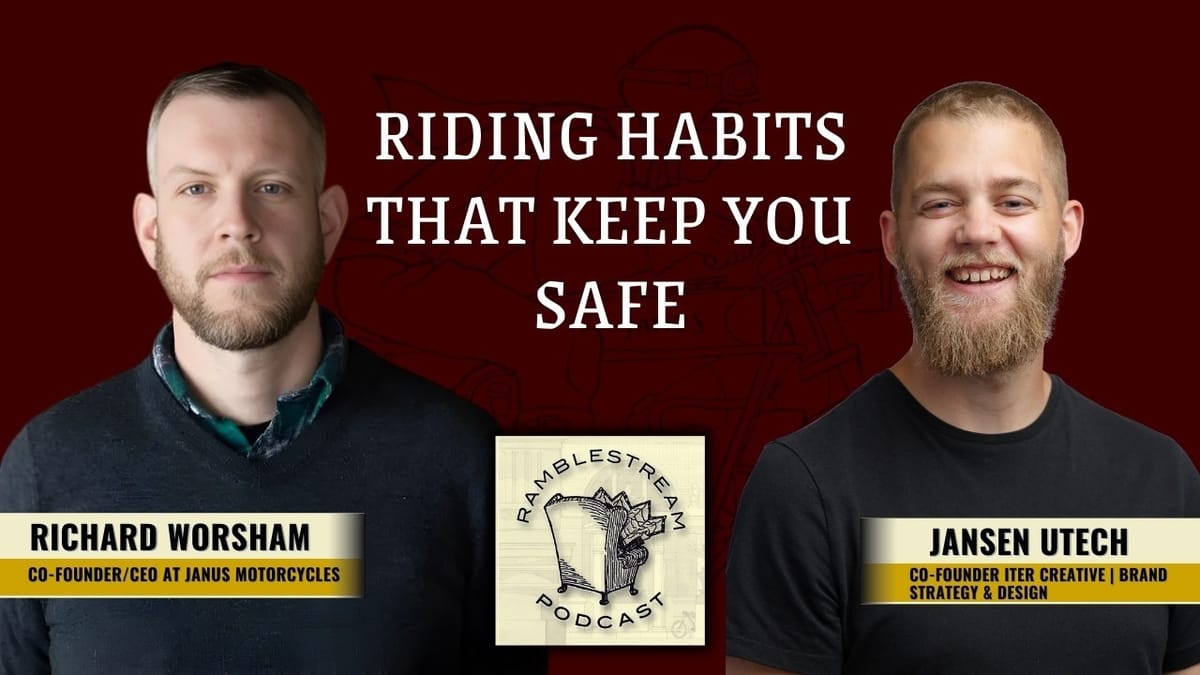
What if your habits are the truest version of you, what shows up when there’s no time to think? We dive straight into that idea and test it against real motorcycle moments: the instant a car cuts across your lane, the ritual of gearing up, the subtle ways practice turns intention into instinct. Along the way, Richard reads A.E. Stallings’ Pencil, a poem that flips certainty into revision, and we nerd out on fountain-pen ink as a metaphor for tools that shape behavior. It sounds small, but it opens a bigger door: you don’t become a careful rider by wishing. You become one by doing the careful things until they feel automatic.
We also bring the garage to the mic with featured builds, a Phoenix 250 with low bars and a Paragon logo throwback, a 10th Anniversary Halcyon 250 in super chrome with elegant hand-painted striping, and talk about why craft choices matter. Just like good cornering lines and smooth braking, design details are habits of attention. They tell a story about what we value and how we want to ride. We contrast habits with routines without getting lost in semantics, grounding the conversation in real cues, defaults, and the identity-based choices that quietly transform both rider and ride.
And yes, we address the elephant in the room: bad habits. Wanting to wake early or maintain your bike on schedule won’t change anything by itself. But changing the environment, choosing a simpler first step, and repeating it until the body learns can. That’s true for throttle discipline, pre-ride checks, and even the order you gear up. When it matters, you won’t rise to your goals, you’ll fall to your habits.
Stick around for community shout-outs, live Q&A, and announcements: a Ramblestream special at the Rye'd or Die show on February 14, winter motocamp plans, and production goals as we scale.
If this resonated, tap follow, share with a rider who gets it, and leave a review so more folks can find the show. What habit defines you on the bike right now?
More About this Episode
What Is a Habit? How Repetition Shapes Who We Become
The word habit gets thrown around casually. We talk about good habits and bad habits, habits we want to build and habits we want to break. We treat habits like accessories to our lives, things we can add or remove at will. But habits are far more foundational than that. They are not just things we do. They are expressions of who we are.
When you step back and really ask what a habit is, the answer becomes both simpler and more unsettling than expected. A habit is not what you intend to do. A habit is what you actually do, repeatedly, until it becomes automatic. Over time, those repeated actions harden into character.
This is where habits stop being motivational poster material and start becoming something more serious. Habits are not aspirations. They are evidence.
Habit as Character, Not Preference
The original meaning of the word habit is revealing. Historically, a habit referred to clothing, particularly the garments worn by monks. That uniform was not a fashion choice. It was an outward sign of an inward commitment. To wear the habit was to embody a way of life.
That idea still holds. Your habits are what you wear in the world, whether you realize it or not. They signal your values, your priorities, and your discipline. They reveal who you are long before you ever explain yourself.
This is why habits are inseparable from character. Character is not built in moments of intention. It is built through repetition. You do not become disciplined because you value discipline. You become disciplined because you consistently act in disciplined ways.
The uncomfortable truth is that we often want the identity without the repetition. We want to be the kind of person who rides regularly, trains consistently, shows up prepared, or lives deliberately. But wanting is irrelevant. Habits do not respond to desire. They respond to action.
Intention Versus Action
There is a temptation to define habits as intentional behaviors. That definition works well for positive habits we are proud of. It falls apart the moment we look at negative habits.
Most bad habits are not things we consciously choose in the moment. They are things we fall into. We may intend to act differently, but intention alone does not interrupt repetition. This gap between intention and action is one of the defining features of being human.
You can intend to wake up earlier, ride more often, or train more carefully. But if your actions do not change, neither does your habit. And if your habit does not change, neither does your character.
This is why habits eventually operate below the level of conscious thought. They are stored in the body as much as in the mind. When something unexpected happens, you do not have time to decide who you are going to be. You default to what you have practiced.
Habits and Muscle Memory
Motorcycling offers one of the clearest illustrations of how habits work. When a car pulls out unexpectedly or traction disappears mid corner, there is no opportunity for reflection. You do not pause to think about best practices. Your body reacts according to training and repetition.
At that moment, intention is irrelevant. Habit takes over.
This is why riding skill is inseparable from habit formation. Smooth throttle control, proper braking, scanning for hazards, body positioning, and gear discipline are not decisions made fresh every ride. They are behaviors ingrained through repetition.
The same applies off the bike. The rider who automatically reaches for gloves and helmet does not do so because they weighed the risks that morning. They do it because it feels wrong not to. The habit has become part of their identity.
Habits Are Neutral Until We Judge Them
Habits themselves are neither good nor bad. They simply are. The moral judgment comes later, when we decide whether a habit moves us closer to or further from the person we want to become.
Riding motorcycles is a habit. Modifying bikes is a habit. Walking into the garage just to look at a machine is a habit. These behaviors shape how we spend time, how we think, and how we relate to the world.
Some habits sharpen us. Others dull us. Most operate quietly in the background, unnoticed until we stop long enough to examine them.
The danger is not having habits. The danger is having habits you did not choose.
Choosing Habits by Choosing Identity
If habits define character, then the question becomes how to change them. The answer is both straightforward and difficult. You change habits by doing different things, repeatedly, until the new behavior becomes automatic.
There is no shortcut. There is no moment where desire transforms directly into habit. There is only action, followed by action, followed by action.
One useful way to approach habit formation is to think in terms of identity rather than outcomes. Instead of focusing on what you want to achieve, focus on who you want to be.
If you want to be a rider who is confident and controlled, you practice braking and cornering deliberately. If you want to be someone who rides regularly, you schedule rides and show up even when conditions are imperfect. If you want to be disciplined, you act in disciplined ways before you feel disciplined.
Habits do not create identity overnight. But over time, they leave no room for ambiguity.
Habits, Routines, and the Road Ahead
Habits are often confused with routines, but they are not the same thing. A routine is a structure. A habit is a behavior. Routines can support habits, but they cannot replace them.
You can have a routine without intention. You can also have intention without habit. The transformation happens when intention, repetition, and identity align.
This distinction matters because routines can be disrupted. Habits endure. When circumstances change, routines may fall away. Habits persist because they are internalized.
This is why habits matter so deeply in riding, craftsmanship, and life. They are what remain when conditions are less than ideal.
Why Habits Matter in a Life of Riding
Motorcycling is not just an activity. For many of us, it is a way of being in the world. It shapes how we move through space, how we perceive risk, and how we relate to time.
The habits we build around riding influence not only safety and skill, but also meaning. Riding regularly cultivates attentiveness. Working on machines cultivates patience. Traveling by motorcycle cultivates humility and adaptability.
These qualities do not appear because we admire them. They appear because we practice them.
The Quiet Power of Repetition
Habits are unglamorous. They do not announce themselves. They do not care about motivation. They accumulate quietly, day after day, shaping who we become without asking permission.
This is both the warning and the promise of habits.
If you do nothing, habits will still form. If you choose deliberately, habits can transform you.
In the end, a habit is not something you have. It is something you are becoming.